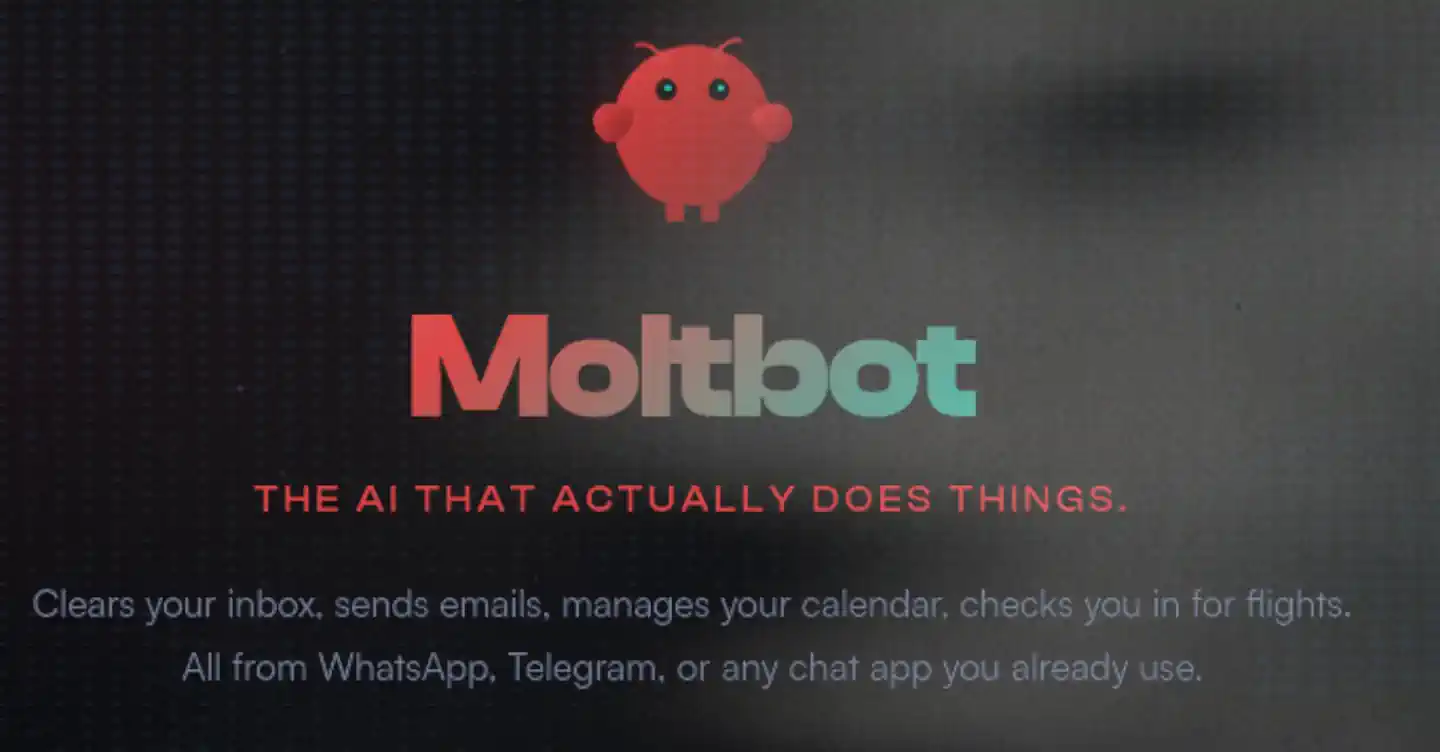
Moltbot (formerly Clawdbot) is a self-hosted, OS-integrated AI assistant that can prove highly useful, particularly for independent professionals or small businesses, but it introduces a considerable attack surface if not isolated with rigorous security measures—and most potential users are unfamiliar with these requirements.
-
It is a "personal" AI assistant that runs locally as a gateway between messaging apps (WhatsApp, Telegram, Signal, terminal) and an AI agent (Claude) capable of executing commands on your machine.
-
It can search files, read logs, execute scripts, manage email and calendars, and integrate with external services via APIs and OAuth tokens.
-
It is primarily controlled via chat: you send a message, and the agent translates it into actions on your system or connected applications.
-
It follows a "local-first" model: data, credentials, and memory are stored on your machine, not the provider's cloud, reducing exposure to big tech but concentrating risk on your endpoint.
Key Functionalities
-
Operational automation: Inbox cleanup, email sending, calendar management, flight check-ins, reminders, and periodic tasks via internal cron and configurable heartbeats.
-
Messaging integration: Interaction and commands from WhatsApp, Telegram, or other channels, turning it into a "virtual employee" accessible from mobile devices.
-
Proactive monitoring: Heartbeats that check urgent email, calendars, system activity, and can issue alerts without manual intervention.
-
Configurable persistent memory: Markdown files allow defining personality, policies, user data, and checklists, facilitating adaptation to user workflows.
-
Extensibility: Integration with third-party APIs (e.g., stock markets, Spotify, internal apps) and the ability to define "skills" or specialized scripts for business processes.
Example: A small office can use Moltbot to scan support email every 30 minutes, extract critical incidents, create tickets, and notify the on-call technician via Telegram.
Technical and Security Risks
-
Expanded attack surface: Integrates messaging, email, file systems, and external services, creating potential data exfiltration channels that bypass traditional controls (DLP, proxies, EDR).
-
Plain-text storage: Credentials (API keys, OAuth tokens, pairing URIs), conversation history, and corporate data are stored in unencrypted files.
-
Control interface exposure: Instances have been found with admin panels accessible from the internet due to misconfigured reverse proxies, allowing attackers to seize bot control.
-
Command execution risk: Run with elevated privileges (root or sudo accounts), any agent compromise equates to full host takeover, including kernel and all local data.
-
Prompt injection and skills abuse: Malicious inputs via social media, email, or chat can trick the agent into ignoring policies, leaking private information, performing unwanted actions, or using malicious community-distributed skills.
-
Lack of default guardrails: The design prioritizes power and flexibility; its own documentation and third-party analyses note no "perfectly secure" configuration exists, with security measures being optional and easily weakened.
Implications
-
Sensitive data leakage: Client information, contracts, cloud service credentials, and internal emails may end up stored in plain text or exfiltrated via bot responses to external actors.
-
Operational risks: Automated actions (purchases, critical file modifications, social media posts) can trigger due to configuration errors, ambiguous prompts, or external manipulation.
-
Attacker appeal: By centralizing credentials and access in a single "digital butler," it becomes a high-value target for infostealers and AI-agent-focused malware.
Usage Recommendations
-
Treat Moltbot as privileged infrastructure: Use a dedicated, hardened host with minimal services and ongoing security monitoring.
-
Never run it as root; employ a service account with least-privilege permissions and segment access to files and resources.
-
Avoid exposing control interfaces to the internet; if using a reverse proxy, enforce strong authentication, IP allow-listing, and configuration reviews.
-
Minimize integrations: Connect only essential services and periodically audit stored tokens and keys.
-
Define internal policies: Specify what data the agent can access, what actions it can perform, and when its use is prohibited (e.g., highly confidential or strictly regulated data).
-
User training: Explain prompt injection, social engineering, and skills abuse risks before granting staff access.
When deployed judiciously, Moltbot can deliver automation and productivity in small professional environments, but only if its rollout demands the same security design and control rigor as a critical server.